

AARHUS CONVENTION: IMPLEMENTATION TOOLS AND MECHANISMS FOR PUBLIC PARTICIPATION
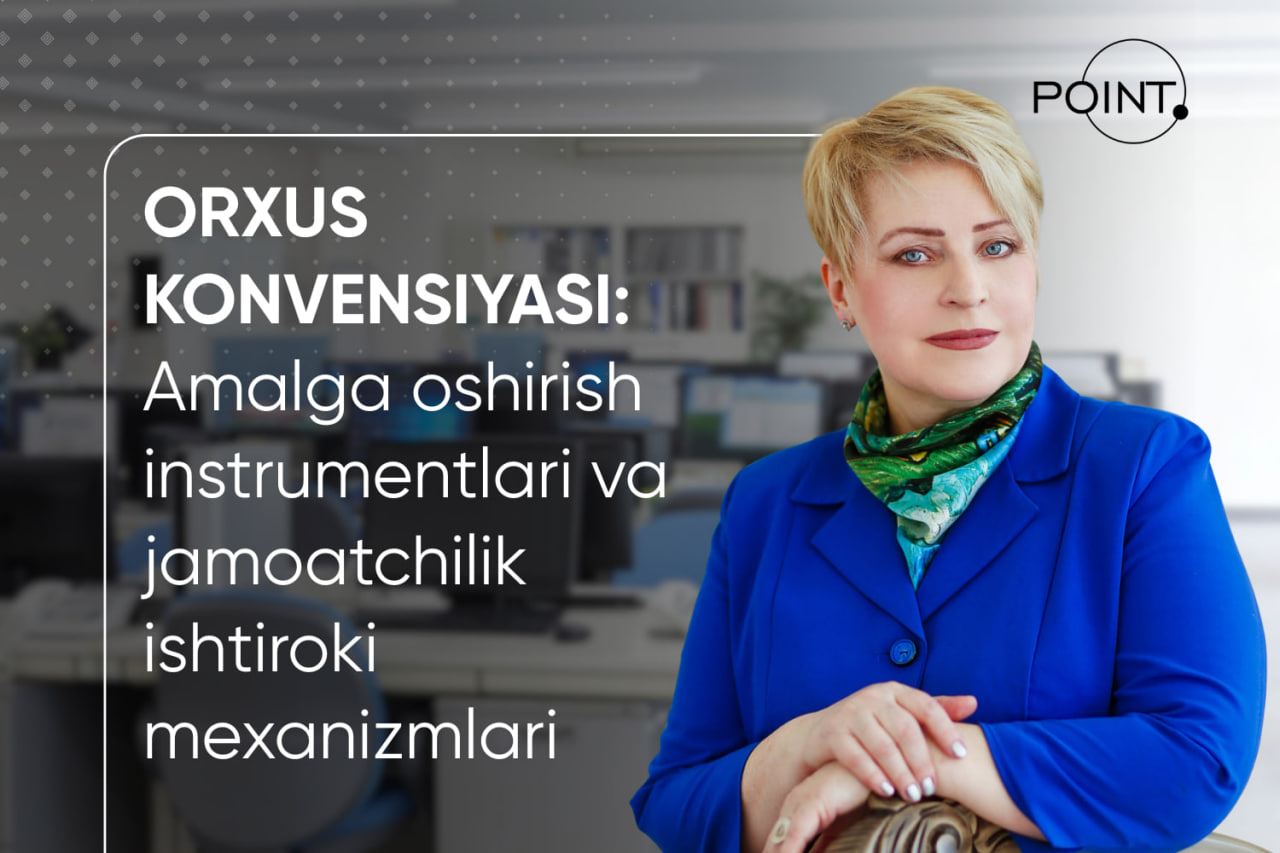
The Aarhus Convention stands as one of the most significant international legal instruments for ensuring public participation in environmental governance. Yet, like any powerful mechanism, its effectiveness depends entirely on how wisely, strategically, and competently it is used. For this reason, anyone seeking to make full use of the Convention’s opportunities must first develop a clear understanding of its principles, procedures, and practical mechanisms.
A dedicated implementation guide has been developed within the framework of the Convention, offering detailed insights into best practices drawn from the experiences of countries across the Aarhus region. This resource serves not only civil society organizations, but also public institutions, experts, and business actors seeking to better understand how meaningful public engagement can improve environmental decision-making.
Originally, the Aarhus Convention was designed for the region of the United Nations Economic Commission for Europe. Today, however, all Central Asian countries have become full participants in this international legal framework. This marks an important shift, opening new opportunities for a more transparent, accountable, and modern model of environmental governance across the region.
Three Fundamental Pillars
The Aarhus Convention is built upon three core pillars:
- the right of access to environmental information;
- public participation in decision-making;
- access to justice in environmental matters.
Our organization has made particularly active use of the second pillar: public participation in decision-making processes. Through this mechanism, several environmentally hazardous projects have been halted before causing potential damage. In other cases, public engagement has helped improve project design, significantly reducing negative environmental impacts.
This experience demonstrates one important truth: public participation is not merely a formal requirement. It is a mechanism with genuine transformative power.
New Opportunities for Uzbekistan
For Uzbekistan, which joined the Aarhus Convention relatively recently, substantial opportunities are now emerging. In particular, learning from neighboring countries and adapting successful regional practices could prove highly beneficial.
For reference:
On March 11, 2025, the Republic of Uzbekistan adopted Law No. ORQ-1045, “On the Accession of the Republic of Uzbekistan to the Convention on Access to Information, Public Participation in Decision-Making and Access to Justice in Environmental Matters (Aarhus, June 25, 1998).”
In this regard, Kazakhstan’s experience deserves particular attention. The country has established a comparatively robust legal framework for public participation, embedded both in its Environmental Code and in formal procedures governing public hearings.
The Biggest Obstacle: Public Passivity
Despite the availability of legal mechanisms, public participation often remains limited by one critical factor: passivity.
The challenge, more often than not, lies not within the legal system itself, but in the public’s own reluctance to engage. Many citizens simply do not believe their voices can influence outcomes. The mindset of “nothing will change anyway” continues to weaken civic participation.
This is precisely why showcasing successful examples matters so much. When people witness tangible outcomes, trust begins to grow. And where trust grows, participation follows.
How to Prepare the Public for Meaningful Engagement
Effective public participation requires practical preparation. Citizens need clear guidance on issues such as:
- how to participate in public hearings;
- which documents deserve close attention;
- what questions should be asked;
- how to identify project risks;
- how to understand environmental impact assessment documentation.
Naturally, expert involvement plays a decisive role in this process. Our organization has an advantage in this area, as our specialists are professional environmental experts capable of independently identifying project vulnerabilities and environmental risks.
However, it would be unrealistic to expect every citizen to possess such technical expertise. This is precisely where institutional support becomes essential.
Aarhus Centres: Spaces for Knowledge and Support
Aarhus Centres can play a crucial role in filling this gap. These platforms are specifically designed to educate, advise, and provide practical support not only to the public, but also to government institutions and businesses.
Their assistance may include:
- expert consultations;
- procedural support;
- legal document preparation;
- preparation for public hearings;
- facilitating dialogue among stakeholders.
In essence, Aarhus Centres are more than legal support mechanisms. They are schools of environmental democracy.
Public Participation Also Benefits Business
Public participation is often viewed solely as a mechanism for protecting civic interests. In reality, it also offers substantial advantages for business.
During our training sessions, participants are often asked to identify the benefits of public participation for three different groups:
- the public;
- government institutions;
- business.
Interestingly, the longest list often turns out to be the one for business.
Why?
Because when businesses take public opinion into account from the outset:
- social resistance decreases;
- reputational risks are reduced;
- the likelihood of legal disputes declines;
- costly project delays can be avoided;
- investment stability improves.
In other words, public participation is not an obstacle to business development. It is a practical risk management tool.
A Vital Mechanism for Transboundary Issues
The Aarhus Convention is not limited to domestic environmental matters. It can also serve as an important mechanism in transboundary environmental governance.
In this context, the Espoo Convention also plays a significant role. However, a distinctive feature of Aarhus mechanisms is their recognition of the importance of involving the public from neighboring countries when relevant environmental impacts may cross borders.
For reference:
The Espoo Convention is an international treaty on environmental impact assessment in a transboundary context. Adopted in 1991 in Espoo, Finland, and entering into force in 1997, it requires countries to conduct prior environmental assessments if planned activities may affect other states.
This is especially relevant for Central Asia, where water resources, energy systems, major infrastructure projects, and industrial development frequently affect multiple countries simultaneously.
Conclusion
The era in which environmental decisions were made exclusively by governments or narrow circles of experts is gradually coming to an end. Sustainable, effective, and forward-looking decisions require meaningful public participation.
The Aarhus Convention provides a powerful international platform to make that participation possible.
The real task today is to learn how to use these opportunities effectively, adapt successful experiences, and strengthen public confidence in the power of civic engagement. Because where there is an active public, environmental responsibility grows stronger, governance improves, and the future becomes more sustainable.
Svetlana Mogilyuk
Chairperson, Association “EcoForum of Kazakhstan”
Chairperson, Public Association “EKOM”