

ADVANCING CULTURAL RIGHTS AND ARTISTIC EXPRESSION IN UZBEKISTAN
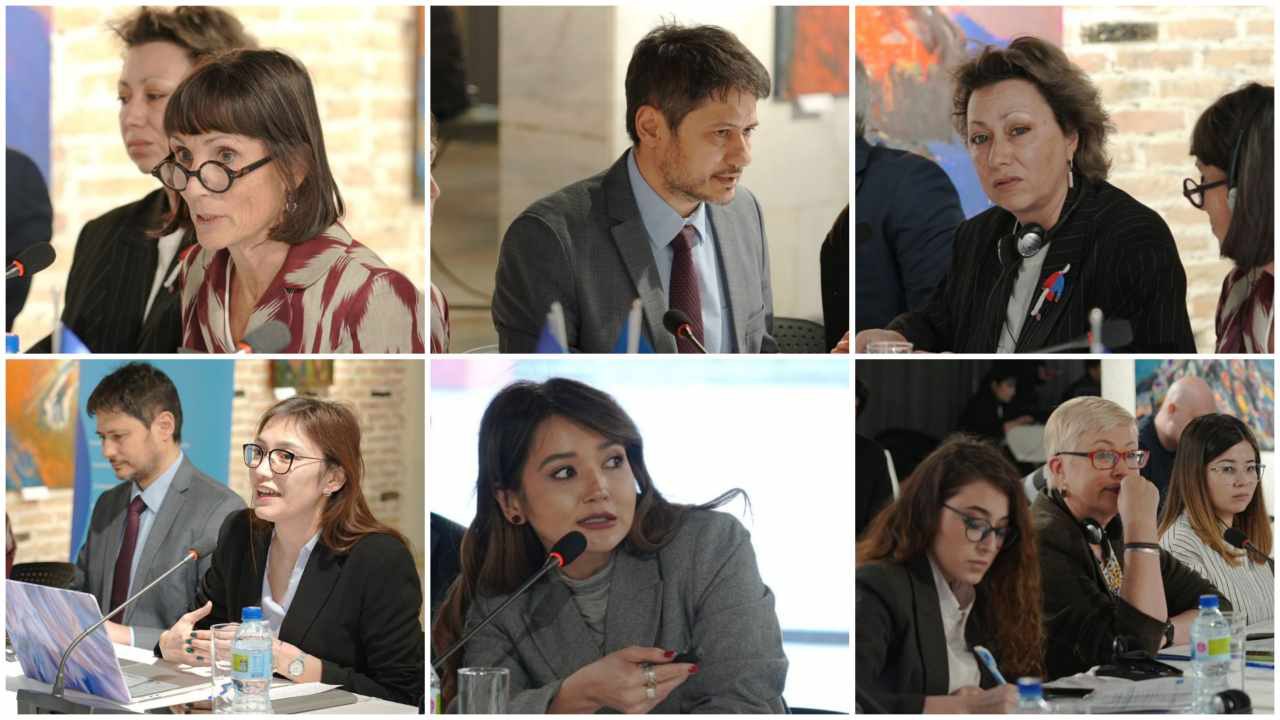
On 11 March, the International Commission of Jurists (ICJ), the “Yuksalish” Movement, Ilkhom Theatre and UNESCO held an International Public Discussion on “Advancing cultural rights and artistic expression in Uzbekistan”.
The event brought together representatives of the state sector, international organizations and public associations. The Ilkhom Theater was chosen as the venue for the discussions. The dialogue sought to examine the legal frameworks are instrumental in fostering a safe environment for artistic expressions across a multitude of spaces such as theatres, galleries, and both public and private venues throughout Uzbekistan.
Uzbekistan is a legitimate member of the United Nations, and our country accedes to the fundamental international documents that demonstrate freedom of expression, protection of rights and interests of citizens. These include the Universal Declaration of Human Rights, the International Covenant on Economic, Social and Cultural Rights and others.
Temur Shakirov, Director (ad interim) of the ICJ Europe and Central Asia Programme noted that cultural rights are enshrined in international documents:
– Cultural rights as human rights right are enshrined in the International Covenant on Economic, Social and Cultural Rights (ICESCR). This covenant, alongside the Universal Declaration of Human Rights, provides a legal framework that obliges States to respect, protect, and fulfil the wide array of cultural rights, including the freedom of artistic expression. It is the duty of States parties to ICESCR, among which is Uzbekistan, to ensure their comprehensive protection and to advocate for an environment where artists can freely contribute to cultural diversity. This commitment underlines the legal obligation to foster conditions conducive to the flourishing of artistic expression as a fundamental aspect of a vibrant and diverse cultural life.
Ambassador of the European Union in Uzbekistan H.E. Charlotte Adriaen noted the significance of the discussion, which allowed exchanging views on relevant issues:
– Uzbekistan, with its rich tapestry of traditions, history, and diverse cultural heritage, recognizes the fundamental significance of cultural rights. These rights encompass the freedom to express one's cultural identity, preserve cultural heritage, and participate in cultural life without any discrimination. While we see that Uzbekistan is deeply committed to upholding international standards of freedom of artistic expression and diversity, we also see that there are challenges facing cultural rights activists and artists. And this open expert discussion is a clear indication of an open and peaceful society, she said.
It’s hard to overestimate how important it is to preserve cultural rights in Uzbekistan and to establish an open dialog between the State and society. Creating a safe environment for self-expression plays an important role in this regard. Civil society representatives are also contributing in this direction. The protection of cultural rights in our country is still improving. Emerging problems cannot be solved instantly. However, such small steps can achieve large-scale goals," noted Bobur Bekmurodov, Chairman of the Yuksalish movement and a deputy of the Legislative Chamber of the Oliy Majlis of Uzbekistan.
The event will result in an analytical document reflecting the challenges and recommendations based on the views of the participating experts.
For reference: The event is organized within the framework of “Enhancing the Quality of Uzbekistan's Application of international Law (EQUAL)" funded by EU through the European Instrument for Democracy and Human Rights (EIDHR) and implemented by the International Commission of Jurists (ICJ). The main objective of the EQUAL project is to promote, by supporting civil society, equal protection of economic, social and cultural (ESC) rights for groups particularly vulnerable to discrimination in Uzbekistan.
Press Service of Yuksalish Movement